 Book a Demo
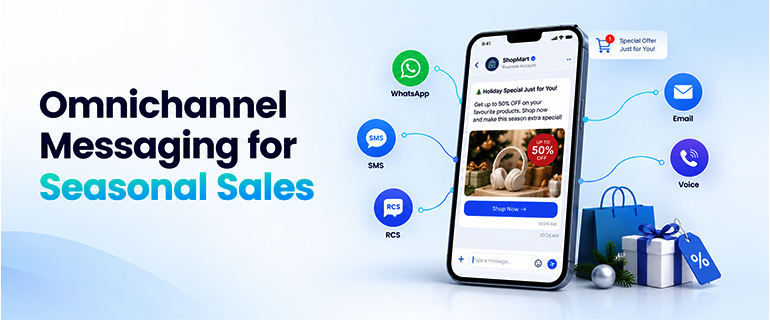
The festive shopping experience follows the same cycle. A shopper finds an offer during Diwali on Instagram, searches for the item on the website, adds it to the cart but gets side-tracked by other stuff. After a few hours, a prompt reminds them of the purchase.
For the customer, it's just another shopping day. For the business, it's a series of opportunities to connect.
Problems arise when each touchpoint works separately. The email offers a discount, SMS informs of yet another deal while WhatsApp shows the same message that the customer has seen before.
Here comes the importance of omnichannel messaging. It allows not only sending more messages but building a conversation between the client and the company.
During Diwali, Christmas, New Year and other significant shopping events, consumers will have numerous options available to them. Each brand will have some sort of sale, countdown, or exclusive offer.
Standing out can be difficult. Being relevant is even harder.
A customer searching for festival gifts would welcome some curated suggestions. An order-waiting consumer would require an update on delivery rather than more discounts. The same goes for a consumer who has already bought the product - he would be annoyed by reminders of his abandoned cart.
Effective seasonal marketing campaigns consider these distinctions.
The takeaway for businesses is clear: know what your customers want before deciding what you're going to send them.
Everyone does not react well to the same mode of communication.
Some consumers spend time on WhatsApp all day long. Others prefer email for browsing offers. SMS channel is ideal for sending time-critical messages, whereas RCS helps in product exploration through visuals.
Omnichannel marketing strategy will ensure that these channels are used effectively according to the needs of the customers.
In this way, when a fashion retail outlet prepares itself for Diwali, it can send emails to make them aware of their collection of Diwali items, use WhatsApp for answering any questions about their products, and use SMS to inform them regarding their order details.
Each message has a purpose. They together help in providing a similar shopping experience.
Also read: Why Enterprises Need an Omnichannel Strategy
Consider getting a discount on a product that you bought yesterday.
Is that really helpful?
Compare it with getting some suggestions about something from a particular category that you were interested in.
Wouldn’t it be much better?
With the required permission from customers, businesses will be able to make their own personalized festive marketing campaigns using the customer’s interests, buying habits, and previous engagements.
For instance, a beauty company may give away free samples of skin care products to customers who express interest in such offers. Electronics companies may send recommendations for products complementary to a recently purchased one.
Personalization doesn’t have to be difficult. Sometimes it’s simply about understanding what a customer wants.
During busy sale periods, customers have questions.
Is this product available? Will it arrive before Diwali? Can I exchange it? Is there another colour?
Answering such queries via email may disrupt the shopping process.
With the help of WhatsApp Business API, businesses can create automation-based two-way customer conversations through approved messaging templates when needed.
A shopper gets a festival discount offer, raises queries regarding availability and gets help without opening a new chat window for that.
Simple queries can be addressed with automation, while complex ones can be escalated to human agents.
Thus, WhatsApp marketing becomes more than just promotions.
Sometimes, one image says more than words can say.
RCS Business Messaging gives users the ability to view rich media content if the device supports it; this includes images of the product, interactive cards, carousels, and suggestions.
Imagine a holiday electronics campaign where the customers have an opportunity to browse through some products right inside the message and see their detailed information.
This is much more interesting than offering products in a standard text list.
Of course, businesses should prepare alternative means of communication in case a particular device or network does not support RCS.
The main idea here is to use the means that will facilitate further action from the consumer’s side.
Cart abandonment is common ground for e-commerce.
The customer adds items to their cart, loses interest, and fails to place an order.
A timely reminder might work, particularly one that addresses a legitimate issue.
Maybe the buyer wishes to know the delivery time. Possibly they require assistance in choosing the right size. Or they have forgotten about the purchase.
Marketing automation could send an appropriate reminder in light of the customer's activity, with frequency control measures ensuring that the customer is not bombarded with reminders.
The reminder needs to seem useful and not like the brand is stalking the customer on the internet.
Seasonal customer engagement doesn't end when someone places an order.
On the contrary, the gap between purchasing and delivery can be particularly significant.
Customers wish to find out if the presents will be delivered on time. In such cases, customers need information regarding delivery, tracking or returns.
The use of an engagement platform for customers can allow businesses to synchronize all order notifications, delivery updates and customer interactions.
Such approach eliminates confusion in hectic times and gives more information about the situation to the customer care team in case of customer contact.
Moreover, successful delivery can make customers loyal to the brand.
It is possible that a festive campaign would send out thousands of messages and result in no sales at all.
That's why businesses need to look beyond delivery counts.
Which channel brought customers back to their carts? Which offers generated conversations? At what point did consumers leave the journey? How many inquiries led to a sale?
This approach will be beneficial when trying to identify such patterns.
Rather than examining WhatsApp, SMS, RCS, and emails separately, an enterprise can consider them in terms of how they contribute to the whole customer journey.
These insights remain relevant even outside of the festive season.
Running multiple festive campaigns may get confusing, especially when several departments have their own communication tools.
Pingverse will help in creating a cohesive communication environment through WhatsApp, SMS, RCS , Email, and Voice.
As a CPaaS platform in India, Pingverse ensures that you benefit from integration, automation, personalisation and centralized campaign management using APIs.
Whether it is about promotional communication, support queries, or transactional communication, everything will be managed as part of one cohesive process.
This is the way to bring relevancy into customer communication processes.
Seasonally marketing is not about delivering messages in bundles just to flood the inboxes of your customers.
What actually catches the attention during this period are the small gestures that improve the overall shopping experience: advice delivered when it is needed, a key message, a reply, or information coming in advance of a query.
An omnichannel messaging strategy, powered by Pingverse, helps connect all of these small interactions.
Relevant conversations with the customer, instead of repeated ones, ensure a much higher likelihood of establishing long-term relationships from the campaigns.
Omnichannel messaging connects channels such as WhatsApp, SMS, RCS and email in order to make the user shopping experience more consistent. It helps brands to coordinate festive offers, queries and purchase transactions.
It helps to reach customers who have an interest in offers by using proper channels, making offers more personalized, recovering abandoned carts and reducing friction in the process of purchase. Outcomes depend on the success of the campaign implementation.
The channel allows users to send offers and provide customers with answers about products and customer support through two-sided conversation, based on conditions.
This channel helps to create a richer experience with product images, carousels and actions in an interactive manner on the supported devices.
Pingverse allows users to connect WhatsApp, SMS, RCS, Email and Voice messaging channels in one communication platform. Helping companies to manage their automated campaigns, customer communications and transaction updates in various channels.